


Research on Chrysididae
Chrysis.net website offers many resources for research on Chrysidids:
Database of the European Chrysididae
The Database of the European Chrysididae collects data on the European species, with information on systematics, geographic distribution and biology.
Database of the Types of Chrysididae, Authors and Museums
For each species present in the database, a report containing its pictures, collecting data and conservation metadata are provided, and a link to the Museum's record and to the Author's record. The database will have a worldwide coverage.
Database of the World Bibliography of Chrysididae
The world literature on Chrysidids.
Published papers
The published papers on the Italian Chrysididae.
Copyright, Authorship, and Ownership statements
All text and images of this page are copyright ©️ Chrysis.net unless otherwise stated - please see individual cases for authorship and copyright details. The specimens pictured are from the authors' or other collaborators' personal collections and from the collections of various museums. Unless otherwise specified, the whole content of this web site is for personal, non-commercial, scientific, and educational purposes given proper accreditation to the page from which they were derived are provided, and under Chrysis.net Terms and Conditions.
For citation purposes
Agnoli G.L. & Rosa P. (2026) Search Results , in: Chrysis.net website. Interim version 04 April 2026, URL: https://www.chrysis.net/search/%252525E7%25252583%252525AD%252525E8%252525A1%25252580%252525E9%252525AB%25252598%252525E6%252525A0%252525A11~3%252525E7%25252599%252525BE%252525E5%252525BA%252525A6%252525E7%252525BD%25252591%252525E7%2525259B%25252598-%252525E3%25252580%25252590%252525E2%2525259C%25252594%252525EF%252525B8%2525258F%252525E6%2525258E%252525A8%252525E8%2525258D%25252590BB76%252525C2%252525B7CC%252525E2%2525259C%25252594%252525EF%252525B8%2525258F%252525E3%25252580%25252591-%252525E5%25252585%252525AB%252525E4%252525B8%252525AA%252525E8%2525259D%252525B4%252525E8%2525259D%252525B6%252525E5%25252585%252525AC%252525E4%252525B8%252525BB%252525E6%25252595%25252585%252525E4%252525BA%2525258B-%252525E7%25252583%252525AD%252525E8%252525A1%25252580%252525E9%252525AB%25252598%252525E6%252525A0%252525A11~3%252525E7%25252599%252525BE%252525E5%252525BA%252525A6%252525E7%252525BD%25252591%252525E7%2525259B%25252598nvq0t-%252525E3%25252580%25252590%252525E2%2525259C%25252594%252525EF%252525B8%2525258F%252525E6%2525258E%252525A8%252525E8%2525258D%25252590BB76%252525C2%252525B7CC%252525E2%2525259C%25252594%252525EF%252525B8%2525258F%252525E3%25252580%25252591-%252525E5%25252585%252525AB%252525E4%252525B8%252525AA%252525E8%2525259D%252525B4%252525E8%2525259D%252525B6%252525E5%25252585%252525AC%252525E4%252525B8%252525BB%252525E6%25252595%25252585%252525E4%252525BA%2525258Bw2t0-%252525E7%25252583%252525AD%252525E8%252525A1%25252580%252525E9%252525AB%25252598%252525E6%252525A0%252525A11~3%252525E7%25252599%252525BE%252525E5%252525BA%252525A6%252525E7%252525BD%25252591%252525E7%2525259B%25252598yut6s-%252525E5%25252585%252525AB%252525E4%252525B8%252525AA%252525E8%2525259D%252525B4%252525E8%2525259D%252525B6%252525E5%25252585%252525AC%252525E4%252525B8%252525BB%252525E6%25252595%25252585%252525E4%252525BA%2525258B3oas/page/16.
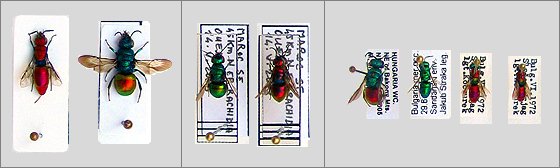
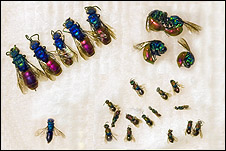 If the specimens are dried (dehydrated), or if you need to re-mount them for a given reason, you have to relax them for some hours in a closed jar containing cotton and some water (humidifying chamber), like you do with other dried insects.
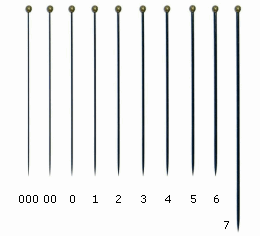
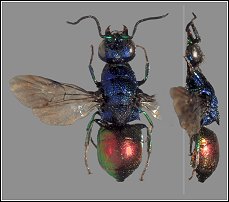 When you need to set a specimen with care, or because it is not soft enough to be mounted directly on the card, you need a mounting board. A good material for such purposes is the extruded polystyrene in sheets for craft applications, known as Styrofoam™: it lets you easily insert the setting pins (#00, #0) and leave them in position until the specimen is dry.
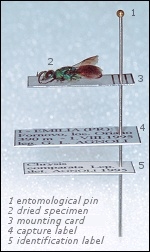 Once dried, the specimen is glued on an entomological mounting card of adequate size and similar to the other cards used for the specimens of the same size. A small drop of glue under the thorax is enough to keep the specimen on the card. The glue must be easy to find/prepare and easy to remove from the specimen through humidification, like an ordinary vinyl glue.
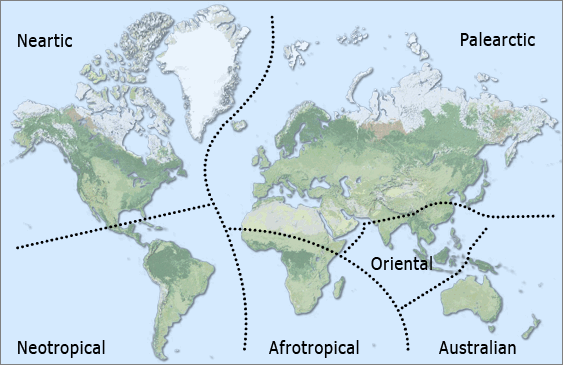
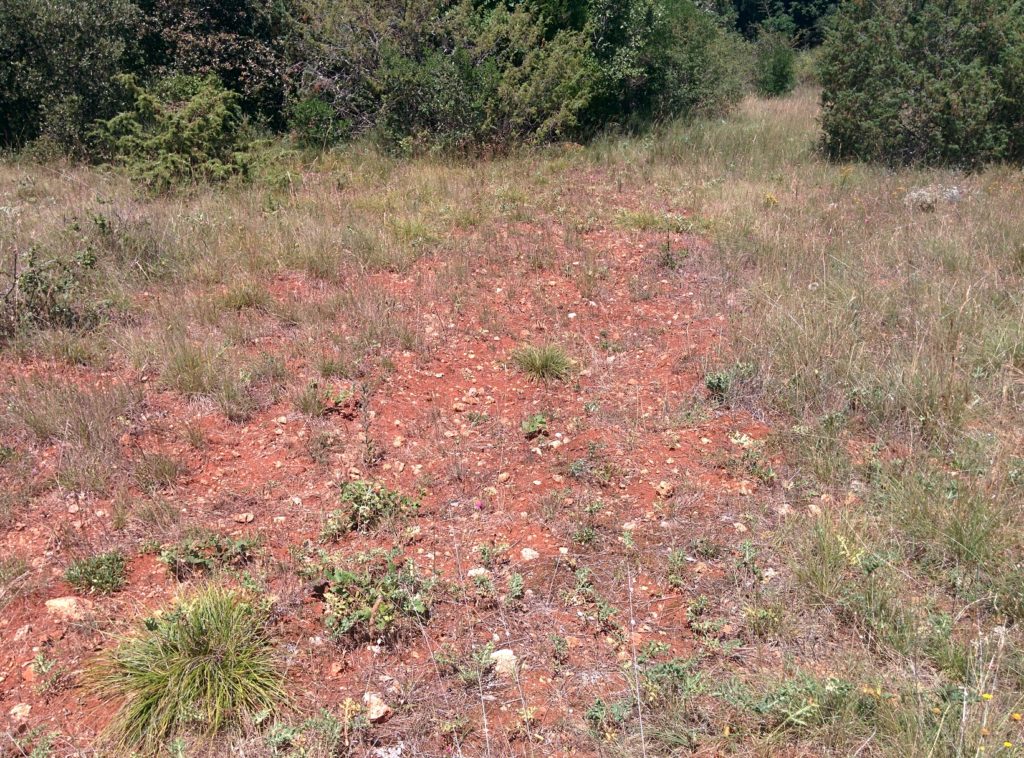
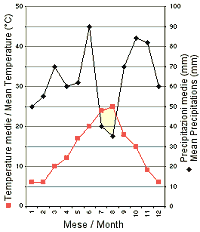 The most favorable environments are those characterized by xerothermic climatic periods, during which the curve of the summery medium temperatures exceeds the curve of the medium precipitations (Walter's climograms). In a more generalized view, the chrysidids prefer subtropical-Mediterranean climates, with warm dried summery atmospheres tending to an arid climate with strong insolation and water deficit for the vegetation, which will be represented by thermophilous species.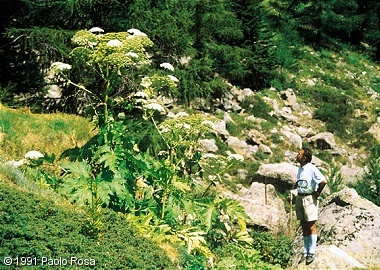
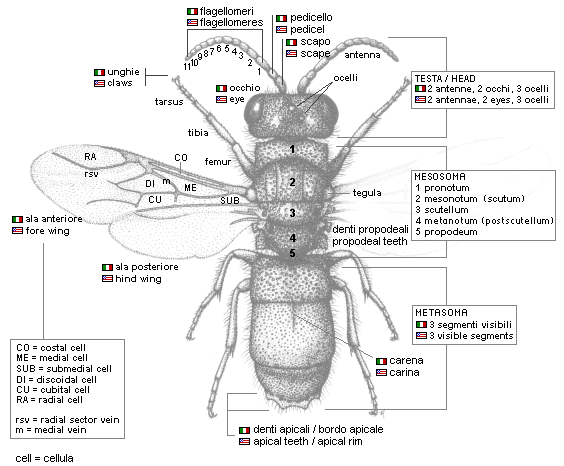
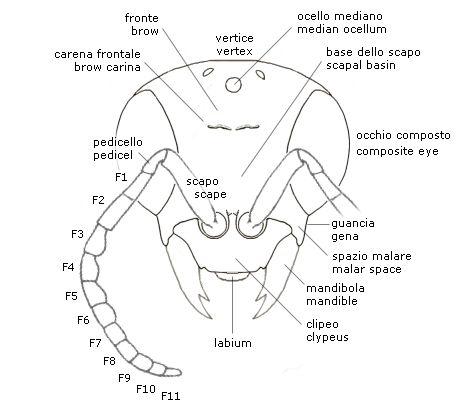
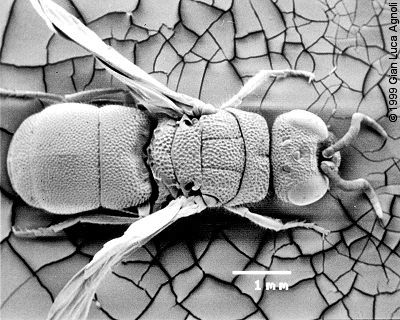
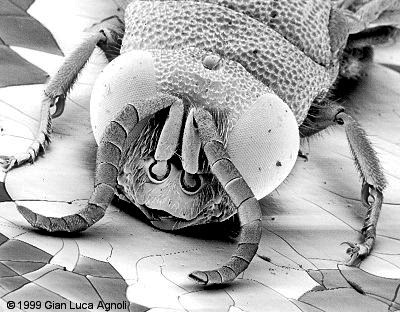
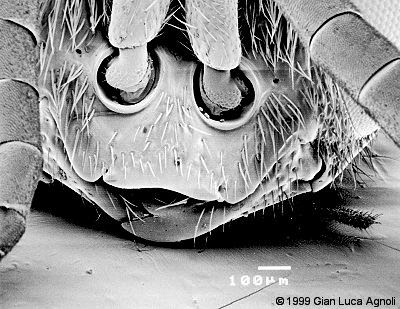
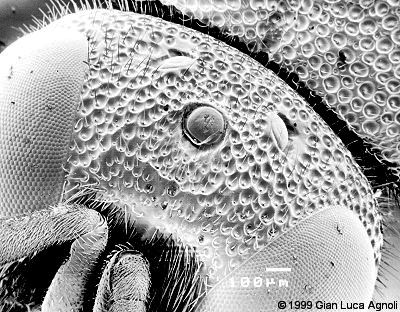
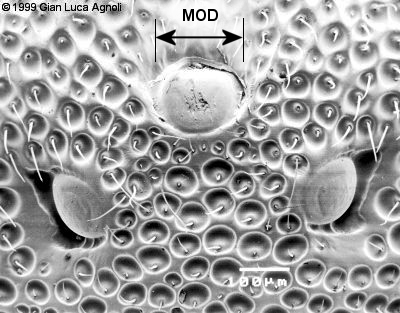
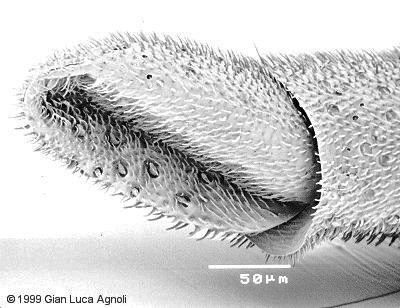
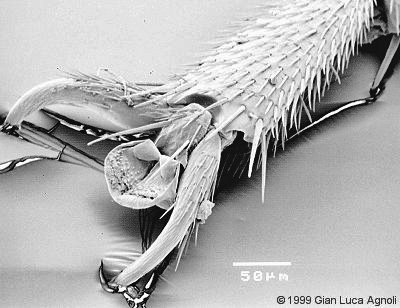
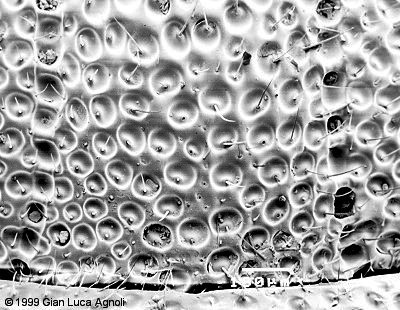
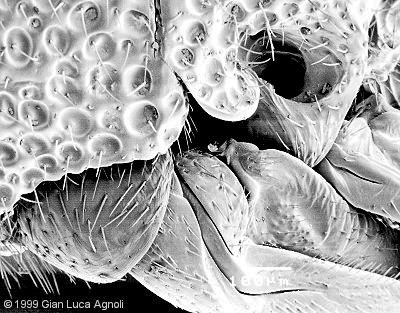
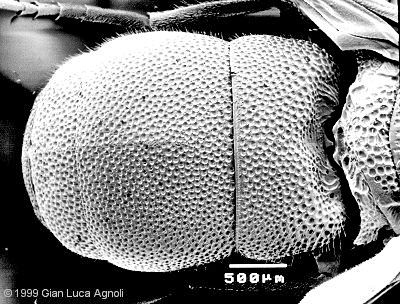
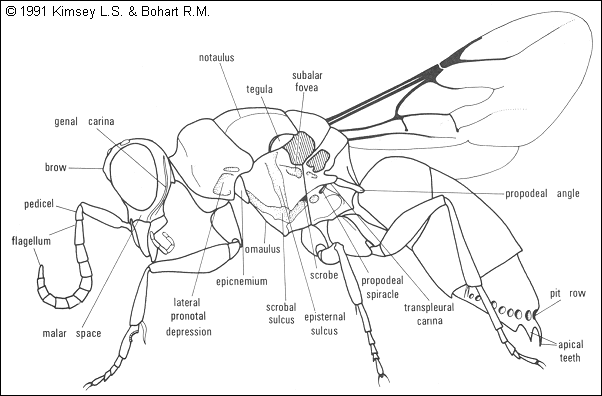
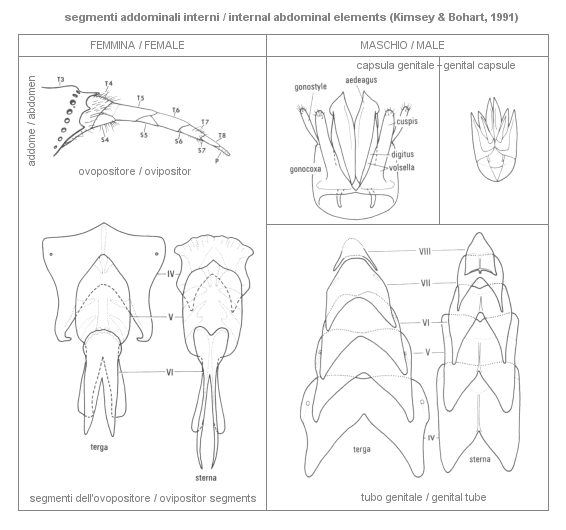
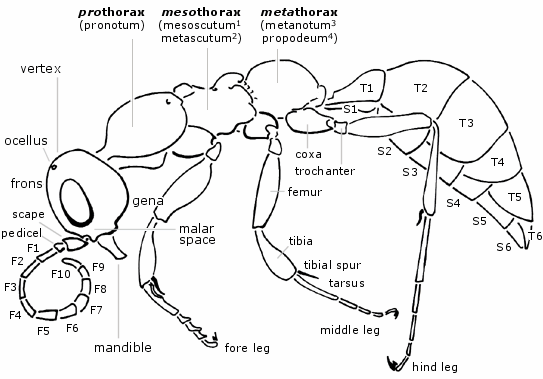
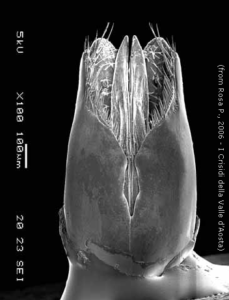 The ABDOMEN of Chrysidids is significantly modified when compared to the abdomen of the other Hymenoptera, and is generally reduced to only 3 visible segments and other internal segments.The Amiseginae, Cleptinae and Loboscelidiinae have 5 external abdominal segments in males and 4 in females, the Parnopinae have 4 in males and 3 in females, the Allocoeliini 2 tergites (dorsal segments) and 3 sternites (ventral segments) in both sexes. In the other tribes males and females have 3 abdominal segments.The external segments are generally very sclerotized and concave in the ventral side, except for Cleptinae, Amiseginae and Loboscelidiinae, where the sternites are convex.A useful diagnostic structure is found in the anal edge of the last tergite, characterized by teeth, carinas, projections and spots.Above the anal edge a characteristic pit row is often present. The internal abdominal segments form a subcylindric telescopic tube, introflected during the rest, representing the female's ovipositor and the male's genital tube. The sting sensu strictu is reduced and is no more working. In males, at the end of the tube a genital capsula is present, standing on the eighth sternite, both structures of diagnostic importance.